2022年1月19日 星期三

Basics of Gantry Drill and Milling Machine

The horizontal milling machine was developed in 1818 by American Whitney. It was in 1884 when American Brown made the first-ever universal milling machine that serves as the elevator milling machine's prototype.

The gantry milling machine was introduced around 1884. It was during the 1920s when the semi-automatic milling machines started to show up. The workbench used the stoppers for performing automatic conversion of fast-feed or feed-fast.

What is a Gantry Milling Machine?

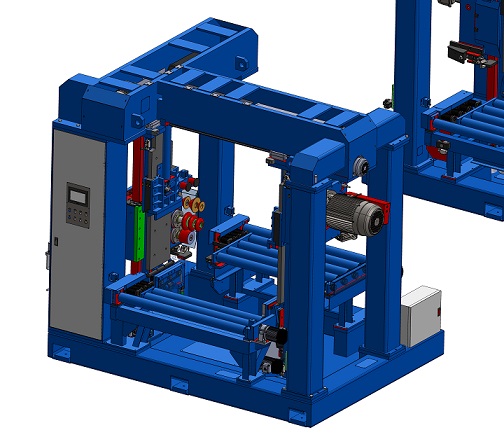
A gantry milling machine, or also called gantry milling, is a type of milling machine with a horizontal long bed and a gantry frame.

The surface on the gantry milling machine can be simultaneously machined with several multiple cutters. Production efficiency and processing accuracy are relatively high. It is also suitable for beveled and flat surfaces for big workpieces in mass and batch production.

A gantry milling machine also has the ability to process some special parts and space surfaces. There are now several variants of gantry milling machine suitable for different workpieces.

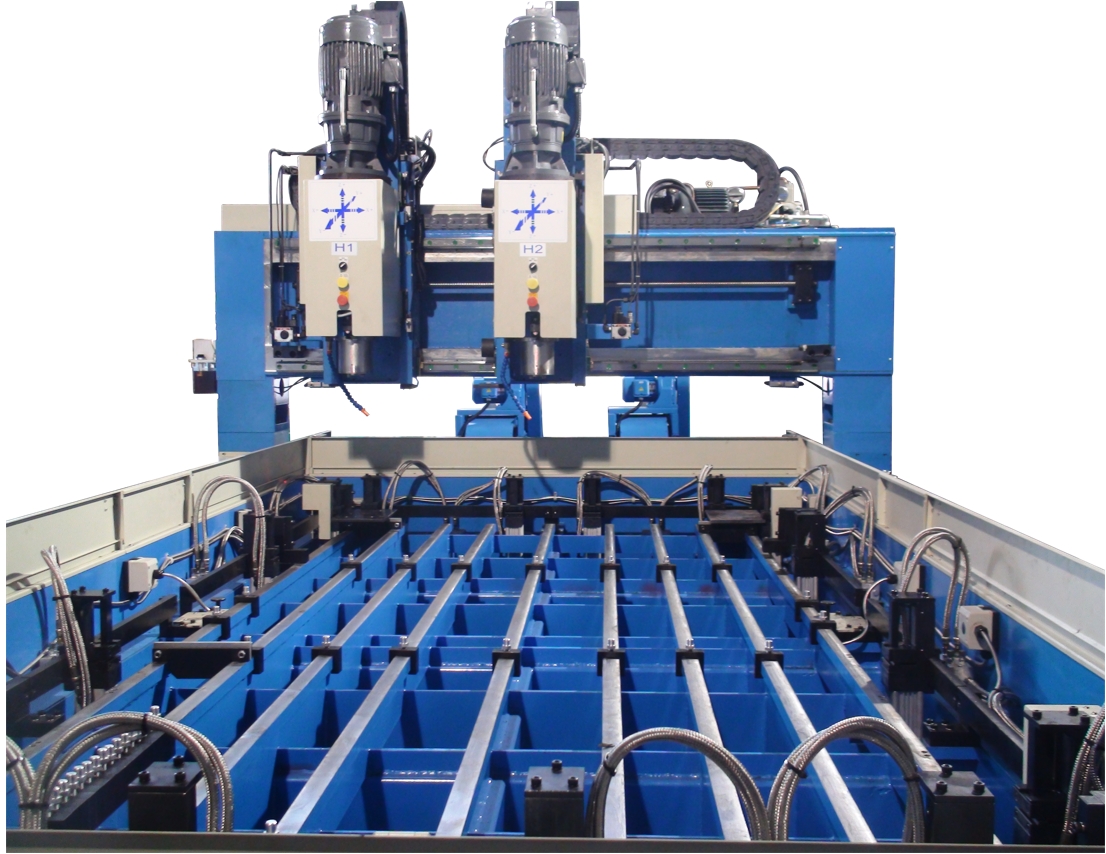
Gantry Drill and Milling Machine

Milling and drilling operations could be done by mounting a powerhead on the beam then loading the milling or drill cutter through the post.

The bed of a gantry milling machine is equipped with the X-axis guide rail, with the gantry milling machine is attached to the bed.

A gantry frame is found above the workbench. The gantry also includes the gantry carriage that is clamped on an X-axis rail. There is a Z-axis guide rail mounted on the gantry. There is a beam provided with the Z-axis carriage.

This beam is also movably clamped by the Z-axis carriage to the Z-axis guide. The Y-axis guide rail is mounted on the beam as well.

The gantry drill and milling machine have a milling device that is arranged on a Y-axis guide rail for the gantry frame to be subjected to a three-dimensional space milling processing of Z, Y, and X under the numerical control system's control.

A CNC portal milling machine provides high precision, boring, cutting, drilling, and milling operations.

Gantry Boring and Milling Machine

A beam is equipped with a boring milling and milling head. The primary shaft, or ram or sleeve, is usable for an axial motorized feed with a fine motion adjustment device. A fine adjustment speed could go as low as 5mm per minute. Both milling and boring operations are feasible.


Difference

The portal milling machine has a similar shape to a planer. The main difference is that the column and beam don't feature a planer holder and instead, it has a milling cutter with the spindle box. The reciprocating motion of the gantry milling machine's longitudinal table is not the primary motion. However, the milling cutter's rotary motion and the feed motion is the primary motion.

Structure

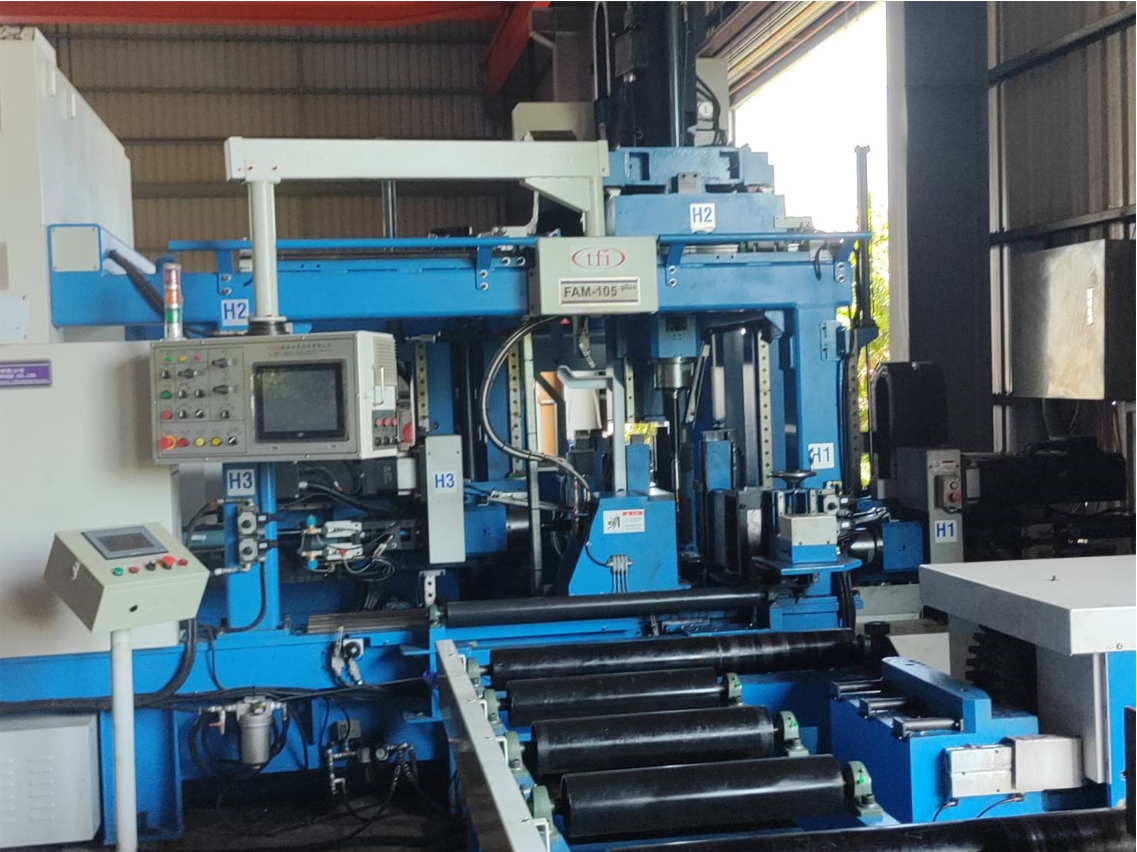
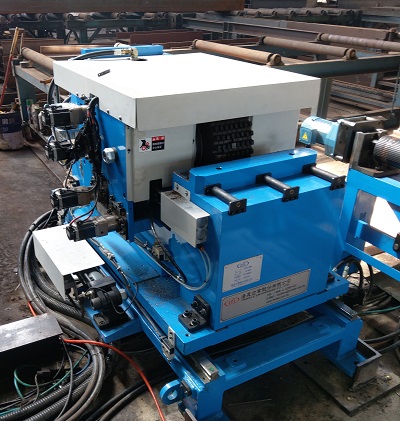
A portal milling machine is made up of a door frame, an electrical control system, and a bed table. A portal frame is made up of a top beam and a column with a beam at the center. This beam is movable up and down along two-column guide rails.

Different Parts of a CNC Gantry Drilling Machine

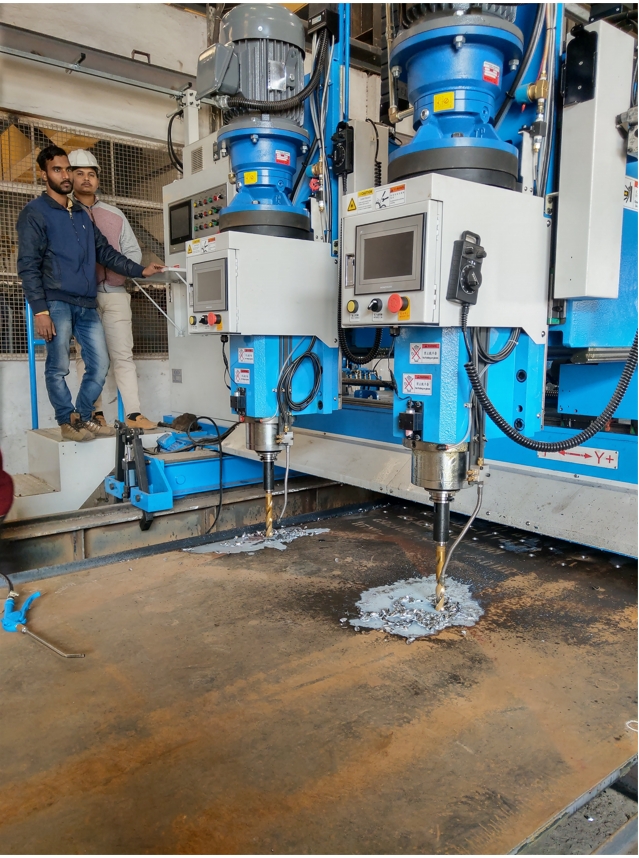
The CNC gantry drilling machine belongs to the category of metal cutting machine tools whose functions include drilling, hole processing, auxiliary milling, boring, and tapping. It is primarily used for the high-efficiency drilling of flanges, flat plates, rings, disks, and other types of workpieces with thickness that is within the effective range.

Blind holes and drilling through holes are made possible on composite materials and single material parts. The machine tool has a digitally controlled machining process and a very convenient operation. It can realize mass production, multiple varieties, high precision, and automation.

The following make up the structure of a CNC gantry drilling machine:

Bed

The bed is a critical part of the structure, finished by the secondary annealing treatment. It has no deformation and has static rigidity and good dynamic. There is a working table that adopts the casting structure, as well as a T-slot that has the reasonable layout for finishing on the plane used for clamping the workpiece.

There is also a drive system adopting the precision ball screw and AC servo motor pair for driving on both sides to create the gantry move in the direction of the X-axis. The adjustable bolts get distributed on the bed's bottom surface that easily adjusts the level of its worktable.

Drilling Power Head

This drilling power head takes on a dedicated servo spindle motor that is driven by the toothed synchronous belt deceleration for increasing torque for driving the dedication precision spindle. This spindle adopts the rear two and front four six rows of the Japanese angular contact bearings for achieving stepless speed change.

This spindle is equipped with a pneumatic tool change system for making the tool. It is an easy and quick replacement, with the feed driven by a ball screw and servo motor. The Z, Y, and X axes can also be linked, adopting the semi-closed loop control for realizing circular and linear functions of interpolation.

Mobile Type Gantry

A movable gantry is processed and cast by gray iron. There is also a pair of ultra-high capacity rolling linear guides installed on the gantry's front side. The servo motor and precision ball screw pair make the powerhead slide move in the direction of the Y-axis, with the drilling powerhead installed on powerhead side. The gantry's movement is made possible by the ball screw's rotation driven by servo motor through precision coupling.

Moving Sliding Saddle

A sliding saddle is the precision cast-iron structure. This is equipped with a set of precision ball screw pairs, two ultra-high load-bearing CNC guide rail slides, and the high precision planetary reduce that is attached to the servo motor for driving the drilling powerhead.

By moving in the direction of the Z-axis, it allows the powerhead to work forward, fast forward, stop, fast reverse, and more. This also has the functions of automatic chip removal, pause, and chip breaking.

All of these parts of the CNC gantry drilling machine work together for the overall function of the equipment and deliver great results.

2022年1月16日 星期日

An Introduction to Rodless Cylinder

A rodless cylinder contains the movement produced in the cylinder body's overall length. It means that, unlike the piston rod cylinders, rodless cylinders can support load throughout the movement. Rodless cylinders are also known as rodless actuators and rodless slides.

How Do Rodless Cylinders Work?

There is a piston moving inside the cylinder bore, with compressed air driving it, similar to a tie-rod or conventional profile cylinder. What makes it different is that the motion gets transmitted to the outside through the length of the body instead of with a piston rod through the end cap.

There is also a strut connecting the piston to a table running on guides along the cylinder's length. The air pressure is also sustained by the sealing strip breaking around the strut while the table moves and re-seals. This sealing strip also retains the sealing surrounding the strut to achieve an acceptable level of leakage.

How to Choose the Right Rodless Cylinder

Before looking for a rodless cylinder, make sure you check first if the application lends itself to using a rodless solution. If torque or turning moments, for instance, risk buckling of a conventional cylinder's piston rod, more possibly over long traverse distances, it is ideal to use a rodless cylinder.

It is also crucial that you consider the specific load that will be moved, the speed, and the distance. You can equate the load to force by simply multiplying by gravitational acceleration. You can then use the force tables for identifying the type of rodless cylinder that is most suitable and calculate the required bore.

Take note that a safety factor is recommended in force calculations to ensure that the cylinders don't work at their limit. Since rodless cylinders operate dynamically, or they bear a load almost all the time, this particular factor should be 50%.

You also need to consider all moments of inertia. To put it simply, it is the guide table's twisting action, and you can calculate it in transverse, horizontal, and vertical directions. The capacity to withstand moments will increase from the internal guide to the external guide, and the precision roller bearing. The distance where the load travels helps determine the required stroke length.

Common Applications of Rodless Cylinders

A rodless cylinder is ideal for those applications in which the buckling of traditional cylinders might pose an issue. It is especially the case if there is a need for long stroke lengths. Maximum strokes of 8.5m are made available for bores of 16mm to 40mm. There are also 8mm strokes for 53mm and 63mm bores, and up to 5.5mm for an 80mm bore.

Aside from that, rodless cylinders can also operate at relatively higher speeds, unlike conventional cylinders. This allows objects to be transported within an acceptable time over large distances.

Tubing and fittings are essential since you need to connect rodless cylinders into the system. Being a component, it is important to have the correct pressure and filtration regulation. While not necessarily essential, the extrusion slots allow using grooves and switches.

Air Source Units

Control Valves

Miniature Cylinder

Standard Cylinder

Stopper Cylinder

Dual Rod cylinder

Compact Cylinder

Slide Table Cylinder

Guide Cylinder

Rodless Cylinder

Clamp Cylinder

Gripper Series

Rotary Cylinder

Directional Control Series

Vacuum Equipment

Fitting/Auxiliaty Equipment

Accessories

Single vs. Dual Pneumatic Cylinder - What’s the Difference?

Do you need devices that can perform continuous movements with no need for you to push any buttons? Most of today's business sectors, including packaging, factory automation, automotive manufacturing, and transportation, integrate pneumatic components into the designs of their machines. These pneumatic systems are clean, inexpensive, and reliable.

What are Pneumatic Cylinders?

A pneumatic cylinder, or also called an air cylinder or actuator, is a mechanical device that uses compressed air for moving a load in a linear path. The most usual kind of pneumatic actuator features a piston and a rod that moves within the closed cylinder in which the piston carries out the preferred movement. Pneumatic systems use air as an energy source for operating and completing a specific task, which is to extend and retract the piston within the cylinder in this case.

Pneumatic cylinders are often applied as two primary types of pneumatic cylinders – the single and dual pneumatic cylinders.

The specific number of ports is the primary difference in the design of these two cylinders. A single pneumatic cylinder has a single port where the pressurized air will enter. A dual pneumatic cylinder, on the other hand, uses two ports for its operation.

This rather simple difference in designs sets these two cylinders apart when it comes to speed and movement. Take a look at a quick overview of these two types of pneumatic cylinders:

What is a Dual Pneumatic Cylinder?

If you need a device that moves loads in both directions, you can use a dual pneumatic cylinder. This is a useful application if your machine needs more than a single movement. Dual pneumatic cylinders, unlike their single counterparts, can retract and extend with no need for a spring. A dual pneumatic cylinder has two ports that allow air to enter and exit rather than applying the pressurized air into a single port alone.

The air will enter through the first port to move the piston forward and apply pressurized air to the second port to retract back the piston into the cylinder. Dual pneumatic cylinders are currently the most commonly used pneumatic actuators, more so than single pneumatic cylinders. This is because of their ability to retract and extend within a faster timeframe, making them more precise and efficient.

Dual pneumatic cylinders are typically used in robotics and industrial industries. These can perform tasks like closing or opening doors as well as moving and lifting off merchandise from conveyor belts. Earth-moving equipment, medical applications, and space programs are other fields where dual pneumatic cylinders are most applicable.

Single Pneumatic Cylinder

The single pneumatic cylinder is your best option if you need to use your machine in linear motions and carry out movements like punching, positioning, and clamping. How do these pneumatic cylinders work? A single pneumatic cylinder has a single port in which pressurized air will enter in just one direction. The load or spring is often fitted into the piston. When the air is compressed and cleaned, this will enter through one port that forces the piston to extend in a single direction to compress the spring.

Air Source Units

Control Valves

Miniature Cylinder

Standard Cylinder

Stopper Cylinder

Dual Rod cylinder

Compact Cylinder

Slide Table Cylinder

Guide Cylinder

Rodless Cylinder

Clamp Cylinder

Gripper Series

Rotary Cylinder

Directional Control Series

Vacuum Equipment

Fitting/Auxiliaty Equipment

Accessories

All About Industrial Slitter Knife

Fabrics, films, heavy film, laminates, non-wovens, paper, and vinyl are usually manufactured onto bulk and large material rolls. This type of roll is often too huge to use in the final product, which makes it necessary to convert the material into smaller rolls for the final production with the use of the process known as slitting.

Throughout this process of slitting, the material on the parent or master roll is unwound then cut into certain widths or slit widths through traveling by a series of blades. This is where slitter knives come in handy.

A slitter knife has a design whose purpose is to slit an extensive variety of materials in different applications. These are useful in numerous industries due to their ability to cut materials like textiles, plastic, and paper.

Most slitter knives have a beveled edge for optimum cutting power. This beveled edge lets the blade slit the material rather than making standard cuts. The slitting knife will have teeth if its main purpose is to make punctures. These teeth form smaller slits in progression like those that you can find on tear-off paper products.

Common Applications of Slitter Knives

Slitter knives can slit a plethora of materials, which include the following:

  • Corrugated products

Corrugated products including cardboard and fiberboard require high-quality knives to achieve optimal cutting results. Slitting knives can produce slits such materials and keep their edge at the same time.

  • Film and foil

Precision slitter knives also have the sharpness required for smoothly slitting foil. Custom blades are also available to slit other delicate materials such as film.

  • Meats and food

Slitter knives can score and slice various food products. Custom blades can also be developed for applications such as meat processing and slicing.

  • Paper

A slitter knife can also create perforations and slits on paper for various purposes. A toothed slitter blade, for instance, can form a tear offline for tear-away paper products.

  • Plastics

Slitter knives can also be designed to make them suitable for different compositions and thicknesses of plastics. Their durability and sharpness let you work with an extensive array of synthetic materials.


  • Textiles

Fabrics need a sturdy blade that can retain its edge during the usual cutting operations. There are now slitter knives for textiles that can achieve your desired cuts.

Slitter Knife Materials

As expected, all blade applications need the right and appropriate material. There are several materials that are used to produce the slitting edge that you need, and these include:

  • 52100
  • Ceramic
  • CPM 10V
  • D-2
  • High Carbon
  • M-2
  • Solid Carbide
  • Stainless Steel

Buy Slitter Knives from the Best Manufacturer

When looking for a manufacturer of slitter knives and rotary knives, it is important to choose one who has the experience in evaluating your entire operation for the slitting process, make helpful recommendations to increase the lifetime of the blade and improve the cut quality, and provide you with slitter knives that cater to your business's unique needs.

Expert manufacturers of slitter knives and rotary knives analyze the materials that will be cut, the existing blade selection, budgetary requirements, and runtime requirements before they recommend the most suitable product for specific slitting applications.

Mini Slitting Line

Slitting Line Customized

Rotary Slitter knives

Precision Spacer | Shim

Slitting Tools and Equipments

2022年1月13日 星期四

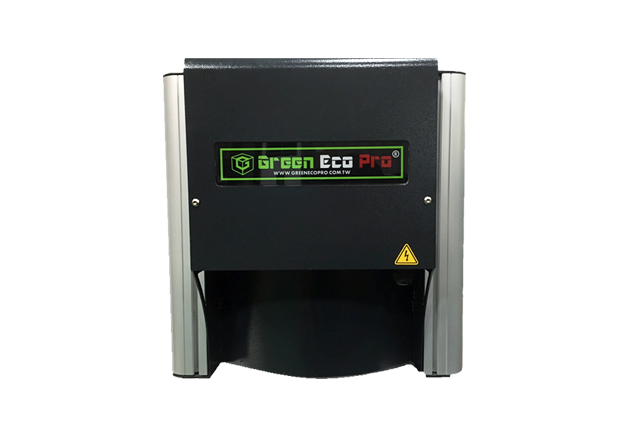
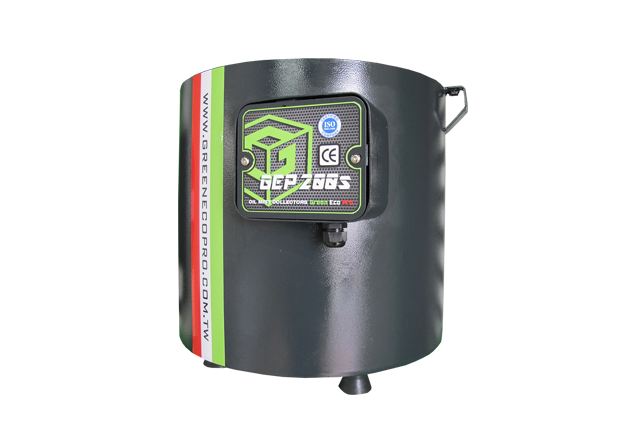
The Importance of Using a Drum Skimmer, Coolant Tank Skimmer, and Other Oil Skimmers for Machine Shops

The use of a coolant tank skimmer in machine shop settings offers a lot of benefits. Oil removal from a machine coolant tank initiates several aesthetic benefits including reducing the amount of smoke produced from the cutting tool that comes into contact with the coolant laden with oil. 

Every time a machine gets shut down for a few days, there is a chance for oil to come to the coolant tank's surface. The bacteria that live inside the coolant tank will then use up any dissolved oxygen present in the coolant mix. The presence of the oil layer on the surface speeds up this process. As a result, the odor-causing anaerobic bacteria thrive and produce that all-too-familiar smell similar to a rotten egg. 

Contrary to common belief, the usual types of bacteria present in the metalworking fluids are not the culprits behind infections. But when the skin is broken, the bacteria that usually inhabit the skin might enter, leading to infection. The presence of carbonates and phosphates that increase the coolant's alkalinity, however, may result in dermatitis. These impurities can be found in water used in the coolant mix. 

The separation of the coolant and the oil also helps lower the costs of disposal. The disposal cost of oil-laden coolant is much more expensive compared to the disposal of oil itself. There are several instances when companies might be able to use this oil again somewhere else or they can also sell this for recycling. Ensuring that the coolant is oil-free also extends its effectiveness and usefulness, lowering the expenses on coolant replacement and maintenance. 

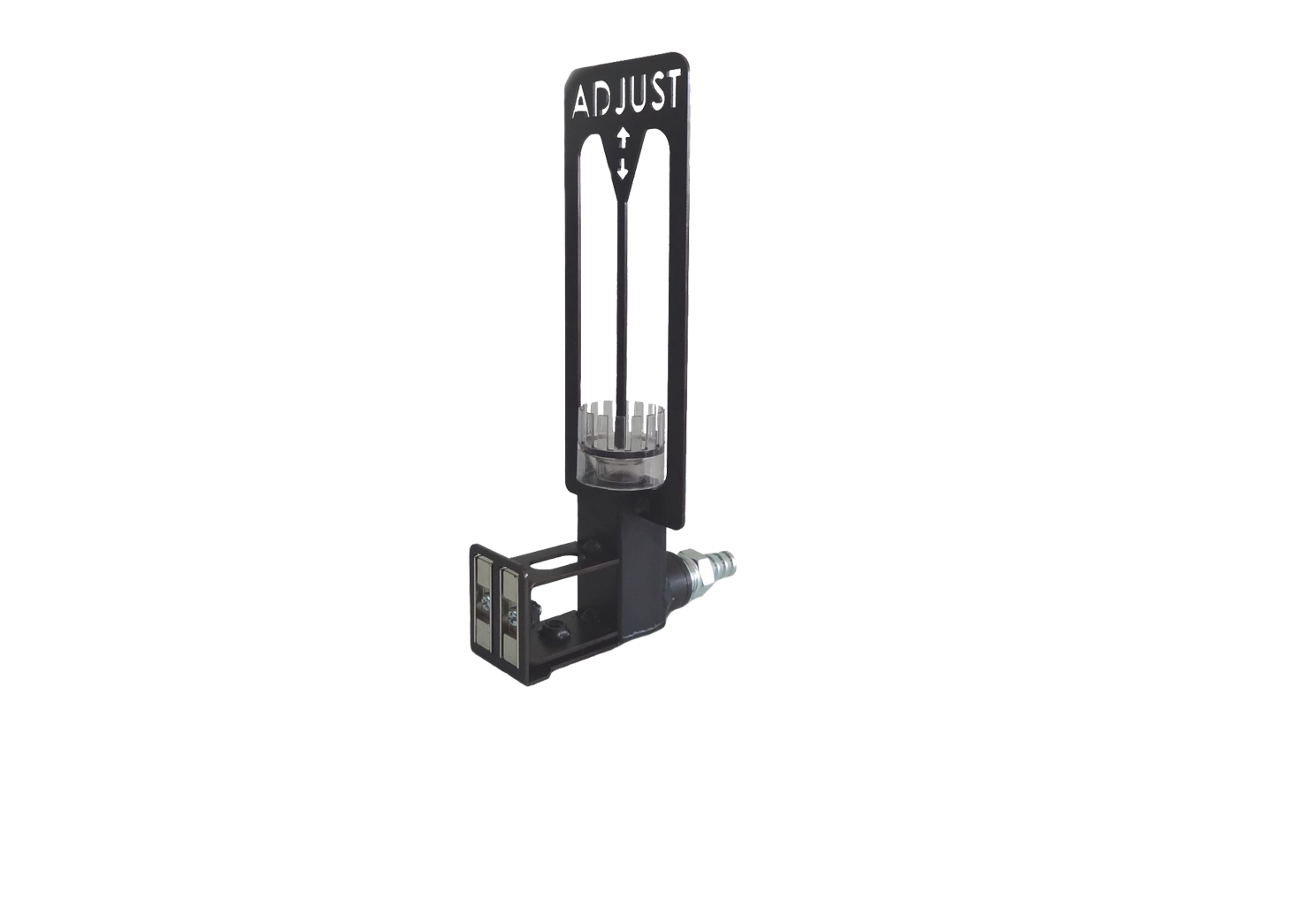
Today, you can find numerous types of skimmers that are available in the market right now. Some of the most common types include belt skimmer, tube skimmer, disk skimmer, coolant tank skimmer, and drum skimmer. Every type of coolant skimmer offers its own set of pros and cons. 

There are several important factors that you need to consider when looking for the right kind of oil skimmer to suit the appropriate application. Different factors including water temperature, water level fluctuation, the use of rust inhibitors, pH level, the specific amount of oil that needs to be skimmed, cost, and quality are all important considerations when choosing an oil skimmer. 

Variable pH levels, high temperatures, and the use of rust inhibitors can all affect the ability of the skimmers to pick up oi. Many manufacturers of skimmers today use various materials for skimming mediums including stainless steel, poly blends, or plastic to match the specific solution where they will be used. 

Today's market is filled with a wide selection of skimmers. When shopping for a drum skimmer, a coolant tank skimmer, or any other oil skimmer for that matter, the quality of the unit you plan to purchase must always be the first thing to consider. Other crucial points of interest include motor design, construction materials, and the particular type of warranty being offered. 

At the end of the day, always remember that choosing the right kind of skimmer can easily make or break your project. Always choose wisely. 


Brush Skimmer, Belt Skimmer, and Other Types of Oil Skimmers

An oil skimmer is a device that separates water and oil to collect oil for remediation or recovery purposes. There are numerous types of oil skimmers that you can find in the market right now, including the brush skimmer and belt skimmer. 

These oil skimmers can skim oil through various technologies such as belts, brushes, weirs, ropes, and oleophilic materials. 

  • Fixed Oil Skimmers

A fixed oil skimmer is installed in one permanent location. This type of skimmer in general includes many types of rope or belt skimmers. These are often installed in oil tanks being used in manufacturing applications. 

  • Floating Oil Skimmers

A floating oil skimmer floats on the water surface. It is towed by or deployed from a vessel. Lines can also hold it in location. In general, these skimmers include some belt skimmers, brush skimmers, drum skimmers, and weir skimmers. 

Belt Skimmer

Different types of belt skimmers are available today. Smaller models usually feature a fixed installation. These skimmers function by using a belt that attracts oil. This oil is scraped clean and accumulated in a tank or sump. Belt skimmers use a belt that has interchangeable pads for different kinds of oil. These can be used in advancing and stationary modes alike, with or without booms. 

Brush Skimmers 

A brush skimmer is configurable as a standalone unit, fitted above weir skimmers, or incorporated in recovery vessels. The density and stiffness of the bristles affect the type and amount of oil they can retrieve. 

Softer bristles are recommended for light oil and stiffer ones are best used for heavy oils. A static brush skimmer operates by the brush bristles that come into contact with oil where it is scraped off to be collected. Brush chains can be used as well that rely on a vessel's forward motion for oil recovery. 

Drum Skimmers

Drum skimmers are considered among the world's most efficient oil recovery skimmers. A drum skimmer is easy to operate, efficient, and reliable as it only recovers oil and a very small amount of water. Every time the floating drum rotates, oil sticks to the surface to separate it from water. 

The scrapers or wiper blades remove the oil and deposit it into a collection trough wherein it is pumped into a storage location. There are available interchangeable drum inserts to improve the recovery rates relative to the environments and different oils' viscosity. 

Drum skimmers are available with either grooved or smooth drums. Grooved drums have a higher recovery rate with the viscous oils, while smooth drums provide higher efficiency with lighter oils like diesel. Hydraulics or air drive drum skimmers. Air units can be used in hazardous places and can also be hooked up to the air brakes of a vehicle for operation. 

Weir Skimmers

A weir skimmer operates by removing the surface layer from the water. The oil flows to the central hopper where this is pumped to storage. The stainless steel weir skimmers are useful in industrial tanks as well as ponds where there are acids and chemicals present.

2022年1月11日 星期二

Beneficial Shopping for Ideas For Drilling Machine

Drilling is one of the most successful and widespread activities often observed in metal processing sector or manufacturing market. These tools are made use of for preparing holes of prescribed diameter and surface finish over the surfaces. The drill bit and energy adjust according to the nature of operations and the surface more than which hole is to be drilled.

Suppose you need to drill a hole in your bathroom in the ceramic tiles for hanging a towel holder, you need to pick the drill which should really be able to make a hole without having damaging or affecting the tile. Likewise you may perhaps also want to produce a hole in the kitchen. The accuracy and finishing of the hole also depends a lot on the ability operator.

Even though choosing high speed drilling machine drilling bit, one particular should really contemplate the following points. The really initial point is that the torque of the machine you are pondering of. The torque is the aspect which will allow you to ascertain other features of a drill bit. The drill with torque of about 400 to 500 per minute will be ideal for all your light tasks of the household.

If you require to make a hole in concrete or in brick or any other strong thing then you may perhaps will need a heavy duty drill as light weight drills will not serve the objective effectively.

These are also accessible in a number of forms such as electric, hand operated and battery operated. Almost all of the drilling machines have changeable drill bits so that you would be able to make hole of desired size.

Based upon the nature of the job drill machine really should be selected, the transportable and light weight machine can be used which is either powered by electrical energy or battery. The best selection is to go for battery powered drilling machine which would assist you with all the drilling applications.

The battery drills are accessible in numerous capacities such as 18 to 24 volts, 14 to 14. 4 volts and from 6 to 12 volts. If you are making use of the machine with greater voltage, then the batteries will last long and generate higher power. Therefore according to the job they really should be chosen.

Another point which really should be regarded as though acquiring a drilling device is the brand. If you have selected a branded or reputed drill, then you will be assured of its efficiency and efficiency. Most of the major brands of the market place are a bit pricey but this element is compensated by their functionality. The leading brands of the marketplace contain Black & Decker, DeWalt, Hitachi, Ridgid and quite a few more are meant for meeting every single drilling requirement of your job.

These are out there with some more characteristics such as they come with wise chargers, some of the drills come with flashlight but if you are going for these capabilities, it will certainly add to the cost of the machine.

Features And Helpful Uses Of Radial Drilling Machines

A radial drilling machine is a tool that is created to drill holes into quite sturdy components which can seldom be performed by ordinary drilling machines. These tools can make holes of unique sizes as well. Compared to the traditional machines, these tools offer you a greater precision and stability.

These devices are widely employed in metal fabrication industries as it presents precision to bore holes in various sizes on challenging metals. As most of the standard drilling machines are fairly unstable, it can seldom supply the essential stability and strength. These machines are typically employed with a CNC router which further simplifies its usage and efficiency. CNC controlled devices can be operated with expertise as the tool is capable of a wide wide variety of tasks.

Some Essential Components:

Arm Clamp: It is primarily utilised to safe the arm and column in place.

Table: It is the location exactly where the supplies are placed and fed to the machine.

Radial Arm: The drill head assembly can be moved to any extent with the use of this arm.

Switch: It also includes a switch which turns the machine on and off.

There are a lot of positive aspects of employing the radial drilling machine. It is really compact in size which enables faster use and operation. It is also recognized to be a single of the most versatile machines as it can conveniently countersink, bore holes and even grind off particles from massive blocks.

The device has a long arm which can be repositioned as required by the user. It is also possible to manoeuvre large pieces of components with the use of this machine. These devices are developed to perform most of the task efficiently so much less effort is required by the user. It can also execute a wide selection of actions as the arm can extend to a considerable length.

It is also deemed to be pretty rugged and sturdy. It has the capacity to carry out different functions quickly and promptly. The device is resistant to adverse circumstances. These drilling machines are made use of in printing industries, automobile and engineering industries for a wide wide variety of applications.

Now there are a huge quantity of on the internet dealers and sellers who showcase a massive range of these machines. Most of these devices consist of distinctive capabilities and give flawless efficiency. There are both manual and automatic or electric machines which are used largely to bore holes into powerful metals.

There are lots of on the net dealers who offer customized machines to the buyers based on specific specifications. CNC drilling machine can be applied for spot facing, milling and drilling, boring, reaming, honing and counter boring. Most of these devices showcase exclusive performance and extreme durability as it is produced with high good quality elements and sophisticated technology. As these machines are created offered with diverse specifications, it is critical to purchase devices which are suited for individual needs. Some of these on-line shops supply these devices at unbelievable value rates. It is also possible to order customized machines from on line shops.

Everything you need to know about the CNC gantry drilling machine

CNC is an acronym for Computer Numerically Controlled, which means computer numerically controlled. It is a new feature commonly accessible for machine tools such as lathes, milling machines, drilling machines, etc. It allows them to improve their working ability and efficiency with the assistance of a computer.

Some of these gantry drills are still controlled manually, which means that workers do not have time to relax or focus on other activities while they are working on them. CNC machines are regarded because they provide high average precision and accuracy, and time efficiency in a compact package.

What are the benefits of using CNC gantry drilling machines?

The following benefits of using a Gantry Drills machine over a conventional Radial Drill are available,

  • CNC control with a lot of punch
  • Drilling takes much less time.
  • Increased degree of protection
  • Unparalleled accuracy
  • Less complicated setups
  • Mark-up time has been reduced.
  • A larger work surface
  • Material handling has been reduced.
  • Design of a gantry
  • Compatibility with carbide-tipped tools

Everything you need to know about the CNC gantry drilling machine:

The gantry drill is an automated, efficient, and high-performance CNC drilling machine with a high level of automation and performance. It was made up of the following individuals:

  • CNC controller that is based on IPC
  • Z-axis lifter controlled by a servo motor
  • Drill spindle with servo motor
  • Tool length detection on the fly

Drilling Machine for Plate Steel with CNC Control:

CNC slider and drilling unit head, with the ability to regulate hole depth and the functions of drilling blind holes, reaming, and chamfering.

The X.Y axis of a CNC steel drilling machine may be programmed to locate holes to drill automatically.

Drilling machine for flat steel with CNC controls Four processing positions, twelve quick hydraulic clamps, each capable of clamping four sets of workpieces simultaneously and downloading workpieces while drilling concurrently are available.

Application of CNC gantry drilling machine:

The P.D. series CNC plate drilling machines are primarily used for the drilling procedure of junction plates and base anchors, extensively utilized in steel construction, iron tower, bridge, and machining industries, among other applications. They are also commonly used for the drilling procedure of flanges.

Feature of CNC gantry drilling machine:

Using a CNC drilling unit head and slider, you can adjust the hole's depth and perform operations such as blind hole drilling, reaming, and chamfering.

The X.Y axis of a CNC steel drilling machine may be programmed to locate holes to drill automatically.

Four processing locations, twelve quick hydraulic clamps, each capable of clamping four sets of workpieces simultaneously and downloading workpieces while drilling at the same time, are available.

The WINDOWS platform runs this programming software, which provides CAD connectivity, quick and easy programming, and visual previewing.

Chip removal is automated, and cooling is accomplished by coolant circulation.

The key equipment, hydraulic pressure, and electric components are sourced from well-known local and international cooperatives.

No foundation is required because of the optimized integration design for the whole machine.

Why do people prefer gantry drills?

CNC is an abbreviation for Computer Numerically Controlled, which signifies that the computer is controlled numerically. Machine tools such as lathes, milling machines, drilling machines, and other similar devices may use this new functionality, which is widely available. Because of the support of a computer, they may boost their working capacity and efficiency.

The fact that some of these gantry drills are still operated by hand means that employees do not have time to rest or devote their attention to other tasks while they are working on them. Computer numerical control (CNC) machines are highly respected because they deliver high average precision and accuracy, and time efficiency in a small container.

CNC Gantry Drilling Machine:

The following benefits of using a Gantry Drill over a conventional Radial Drill are available.

  • CNC control with a lot of punch
  • Drilling takes much less time.
  • Unparalleled accuracy
  • Mark-up time has been reduced.

Advantages of gantry drills:

Below are the advantages of gantry drills,

  • Better precision and accuracy are achieved using this tool.
  • Mistakes in cutting conditions or in dimension may be corrected with relative ease.
  • The reduction in the number of employees necessary helps to reduce labor costs.
  • CNC machines can generate complex designs with great precision in the shortest amount of time.
  • It also has a practical purpose in terms of safety.
  • It is not necessary to have a highly competent operator.
  • This machine is capable of doing the conversion of the unit with ease.
  • It is capable of diagnosing its malfunction. Specialized software makes it simple to diagnose when the CNC system fails to run. It also can assist in the maintenance and repair of the system on an automated basis.
  • In addition, it has an online editing application, which means that any changes and modifications made by the component data are stored in the computer rather than being sent back to the tape for reprocessing.
  • Low-maintenance requirements are necessary.
  • The CNC machine provides a higher level of production and capabilities.
  • It has a high level of dependability.
  • Reduce the number of setup changes over time.
  • It has the capability of operating 24 hours a day.

Rapid prototyping software is available:

CNC machines were the first big breakthrough in fast prototyping, and they have remained such until this day. In the past, components had to be machined by hand before numerical control (as in the case of punched tape technology) or computer numerical control (as in the case of analog and digital computers).

There were inevitably greater margins of error in the final prototype items, which was exacerbated even more when gantry drills were manually operated for larger-scale manufacture. The greater accuracy that CNC machines provide has revolutionized the manufacturing industry's capacity to prototype various materials, components, and other equipment swiftly.

Application in the Manufacturing Industry:

Many new CNC specialized machines are designed expressly for niche production processes and are available for purchase today. Electrochemical machining, for example, is used to cut very durable metal items that would otherwise be impossible to cut. Gantry drills are better suited for prototyping and are thus more often employed for this purpose than production.

What do you mean by CNC machines?

What do you mean by a CNC machine?

Written by a human or generated by graphical computer-aided design (CAD) software, the working program is a computer program. Regarding 3D printers, the component to be printed is first sliced before the software is produced on the computer and then printed. The second operation performed by CNC gantry drilling machines is a computer-aided manufacturing (CAM). The topic is similar to computer-aided design (CAD), but it focuses on manufacturing.

Modern machines combine various tools, such as drills, mills, saws, and other similar tools, into a single cell for certain components that need a large number of distinct tools. However, a variety of machines use an external controller, which allows the component to be transferred from one machine to another by human or robotic operators. In any instance, the stages are applied to pieces that must be a very tight match to the original CAD model to be successful.

Types of CNC machines:

Several aspects must be considered when deciding which CNC machines to add to your operation's inventory. Traditional machining technologies and new machining technologies are the two broad categories into which CNC machines are commonly classified:

  1. Conventional machining technologies   
  2. Unique machining technologies

Conventional technologies:

Drills: Drills operate by rotating a drill bit and moving the bit around the workpiece until it comes into contact with a fixed block of stock material. CNC drills assist in the creation of precise holes in the areas where they are required.

Milling Machines: Milling machines are the most frequent kind of CNC machine in use today, and they are also the most expensive. They entail the removal of material from a stock unit via the employment of rotary cutting instruments.

Lathes: Lathes, which are essentially the inverse of drills, rotate a block of material against a drill bit while being turned. In most cases, lathes establish contact with the material by laterally moving a cutting tool until it gradually contacts the spinning material.

Unique technologies:

Electrical and/or Chemical Machining: There are a variety of unique technologies that employ specific ways to cut material, including electrical and chemical machining. Electrochemical Machining, Photochemical Machining, Electrical Discharge Machining (EDM), Ultrasonic Machining and Electron Beam Machining is just a few of the processes available. In most instances, however, these technologies are focused and are only used in limited situations, such as mass-production using a certain kind of material.

Other cutting mediums: There're a variety of other new technologies that cut materials using a variety of various media. Oxy-fuel cutting machines, Laser cutting machines, water-jet cutting technologies and plasma cutting machines are all examples of this kind of technology.

These machines have gained appeal in various sectors in recent years, but they are still highly specialized pieces of equipment that need extensive training to use.

Materials:

Almost any material may be used in a CNC gantry drilling machine; the material utilized is entirely dependent on the purpose. CNC gantry drilling machines provide adaptability in manufacturing that is beneficial to a wide range of applications.

Metals such as aluminum, brass, copper, steel, titanium, wood, and foam, fiberglass, and polymers such as polypropylene are often used in construction.

The history of CNC machines

What is a CNC machine?

Generally speaking, a CNC machine is described as a machine tool operated automatically utilizing a computer system. When a CNC machine processes a piece of material, it may be made of any material such as metal, plastic, wood, ceramic, or composite. It does it automatically, without the need for a human operator.

The history of CNC gantry drilling machine:

CNC machines are electro-mechanical systems that operate machine shop tools in response to computer programming inputs. CNC is an abbreviation for Computer Numerical Control, which refers to.

It is one of two conventional ways (the other being 3D printing technology such as SLA, SLS/SLM, and FDM) for creating prototypes from a digital software file, the other being rapid prototyping. CNC gantry drilling machines can cut and treat a wide range of materials, including wood, metals, and plastics, for use in engineering and prototype firms, among other things.

Machines using computer numerical control (CNC) technology were created in the 1940s and 1950s, and they depended on a popular telecommunications data storage method called "punched tape" or "perforated paper tape."

Punched tape technology has been rendered obsolete since the 1950s and 1960s, as the data medium swiftly migrated to analog and then digital computer processing, respectively. The efficiency of CNC gantry drilling machines continues to increase as new technologies and higher levels of digital processing power are developed and implemented.

How does a CNC gantry drilling machine work?

In general, machining is transforming a stock piece of material, such as a block of plastic, into a completed product (usually a prototype component) by removing material from the stock piece under controlled conditions.

Computer-Aided Manufacturing (CAM) and Computer-Aided Design (CAD) files, such as Solidworks 3D, are used to control CNC machines, which is similar to another prototype creation method called FDM (three-dimensional printing). While the CAM or CAD software does not drive the CNC machine, it does serve as a guide for the CNC to follow to produce the designs. The CNC machine interprets the design

The capacity to use computer devices to opera can significantly increase shop efficiency by automating highly technical and labor-intensive activities. Using automated cuts makes cutting prototype components more quickly and accurately, particularly when the material is important to the part's functionality.

Frequently, machining operations need several different tools to get the required results. CNC gantry drilling machines often combine tools into common units or cells, from which the machine may create its lines of cutting.

The movement of basic machines is limited to one or two axes. Still, the movement of sophisticated machines is limited to laterally in the x and y-axes, longitudinally in the z-axis, and often rotationally around one or more axes.

The ability to automatically turn components over on multi-axis machines allows you to remove material that was previously "underneath" the part. This removes the requirement for employees to flip the prototype stock material. It allows you to cut both sides of the prototype stock material without the need for human assistance.

Automated cuts are often more accurate than manual cuts since they do not need the user to intervene. Despite this, hand-finishing tasks like etching and basic cuts requiring substantial design work to train the machine for automation are sometimes preferable to automated methods.

Products

Plate Drilling Machine

Plate Drilling Machine

Rail Type Bridge Plate Drilling Machine

Rail Type Bridge Plate Drilling Machine

Beam Line Drilling Machine

Beam Line Drilling Machine

Laser Marking Machine

Beam line stamper

H-Beam Scallop & Beveling machine

2022年1月10日 星期一

Aluminum Casting Machine – The Basics of Aluminum Die Castings

An aluminum casting machine is used for aluminum die casting, a manufacturing process wherein aluminum is heated and melted, and the molten material is poured into steel casting molds or dies.

Once an adequate period of cooling has passed, the material retains the shape of the mold's inner cavity. It can also be removed for additional use or processing. The last components demonstrate various benefits over products and parts made through other methods of manufacturing. The result is that they come in handy in an extensive range of applications and industries.

Aluminum and Why It is Used for Die Castings

Aluminum is one of the metals often used in the processes of die casting. The following are some of the common reasons behind its popularity:

  • Resistance to corrosion

Aluminum is extremely resistant to corrosion that helps in improving the durability of the castings that are made from this material.

  • Customizability

Aluminum can be easily customized and readily retains various complex forms and designs.

  • Grade or alloy selection

Aluminum is available in various grades and alloys, and all of them provide somewhat different characteristics. The broad selection offers manufacturers better freedom when selecting a material for their projects. Some examples of the aluminum alloys that are used in the die casting operations are A380, A360, A383, ZA-12, ZA-27, and ZA-8.

  • Strength-to-weight ratio

Despite being strong, aluminum is a lightweight material that allows manufacturers to form lighter castings with no need to compromise on strength.

  • Thermal or electrical conductivity

The aluminum material is also highly conductive that making it ideal to be used in applications with thermal and electrical transfer requirements.

Aluminum Die Casting Applications

Aluminum casting molds are useful in several industries that include but are not limited to the following:

  • Aerospace

Aircraft requires components engineered for more reliable performance or else, there will be risks of equipment failure during critical applications. The high durability, lightweight property, and relative affordability of the aluminum die castings are the reason why these are recommended for aircraft.


  • Agriculture

Aluminum die castings in the industry of agriculture are integrated into various different machines like combine harvesters and tractors. The components provide reliability and durability that make them ideally used in such demanding applications.

  • Consumer Products

Aluminum die castings can be found in various consumer products. These components help guarantee that the finished products are durable and lightweight.

  • Defense/Military

Firearm manufacturers also use die castings to develop parts for military, law enforcement, and commercial pieces. Examples of the aluminum die cast parts of guns include Remington receivers, trigger guards, as well as other parts for shotguns and rifles.

  • Medical

Different systems and devices use the aluminum die cast parts as well. These components can be integrated into anything, from surgical devices to treatment and diagnostic equipment, and hospital beds.

  • Recreational vehicle

Several recreational vehicle and equipment parts are also made with the use of the process of aluminum die casting. Good examples of aluminum die cast parts of recreational vehicles include functional and structural components and cosmetic components.

With the help of aluminum casting machine, the die casting process is made easier, simpler, and faster.

2022年1月9日 星期日

Turret Milling Machine and Its Features

Milling machines are highly versatile machine tools used to machine solid materials. A milling machine can execute an extensive number of operations, such as planing, cutting, shaping, drilling, diesinking, contouring, and others.

Milling machines are often classified into two primary forms, including vertical and horizontal, that pertain to the main spindle's orientation. The cutting blade in horizontal machines extends horizontally. In a vertical machine, on the other hand, the cutting edge is vertically held on top of the workpiece.

Vertical milling machines have several subcategories, and one of these is the turret milling machine.

What is a Turret Milling Machine?

A turret milling machine mainly operates with the table moving around the cutting bland in all directions. It is a type of milling machine with the ability to cut different kinds of objects.

Turret milling machines are composed of the stationary spindle and the table that is moved to the spindle axis in both parallel and perpendicular directions for cutting the workpiece.

This particular type of machine offers different cutting methods using a quill. This quill allows the raising and lowering of the milling cutter in the vertical direction to cut the specific material.

Uses and Applications of Turret Milling Machines

There are numerous selections of turret milling machines available on the market right now. All of them have different specifications, features, dimensions, and functions. This is why turret milling machines are considered to be the most versatile milling machines today.

But the large ones require a more complicated operation. It is because as the size of the machine increases, the downward and upward movement needs considerable effort as well, not to mention that reaching the quill feed handle also becomes difficult. As a result, it is more preferred for die-sinking operations involving machining a mold into a metal block.

The turret milling machine can also be repositioned anytime to improve the machine's functionality. It is a highly resourceful milling machine made up of various options to align the spindle in different positions. This also has a sturdy structure and a unique design. It also includes several user-friendly features with greater functionality.

Turret milling machines are highly effective machines known for their high performance and low maintenance. Being multipurpose machines, these are also capable of manufacturing a plethora of products.

A turret milling machine is specifically suitable for the production of a wide selection of auto parts. This type of vertical milling machine is actually cheaper compared to horizontal milling machines, which explains why these are often used all over the world.

Among the newest features of turret milling machines is using the so-called CNC or computer numerical control technology. With the use of this state-of-the-art technology, users are allowed to input simple and complex instructions to operate the machine's different parts. This CNC technology can also help boost the user's productivity and allows them to continuously produce a large amount of similar and accurate products. There are also recent models that come with a handheld remote control complete with buttons for spindle movements and machine feeds.

PLANOMILLING HEAD

CNCMILLING HEAD

VERTICAL TURRETMILLING HEAD

ANGLEMILLING HEAD